
Recessed · Fixtures · Outdoor Lighting
Lighting Installation in Tuscaloosa, AL
Good lighting changes how a room looks and works. Next Electrician Tuscaloosa installs recessed lights, fixtures and chandeliers, under-cabinet and accent lighting, dimmers, and outdoor and security lighting for homes and businesses across Tuscaloosa and Northport.
- Residential & commercial
- 24/7 emergency calls
- Tuscaloosa, Northport & nearby
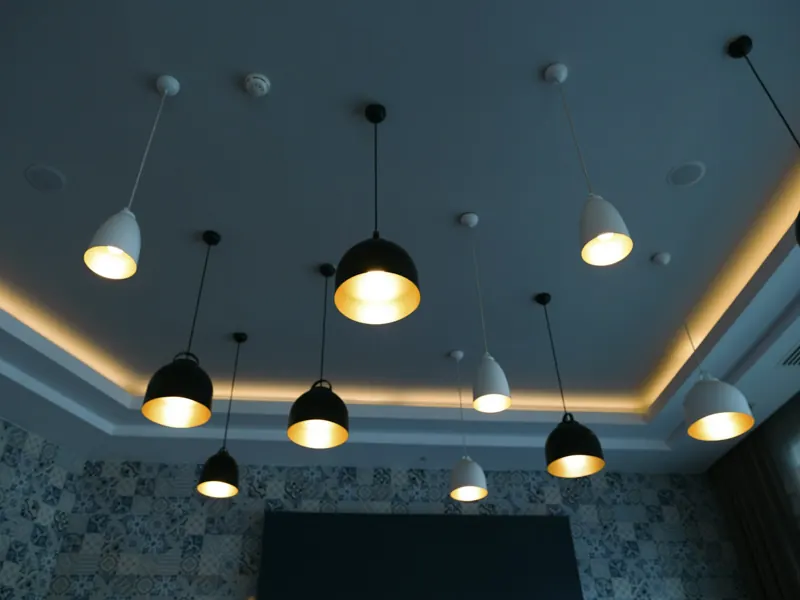
Recessed lighting installation
Recessed lights, also called can lights or pot lights, give a clean ceiling and even light. Most new installs now use slim LED wafer lights that mount in a small ceiling hole without a bulky housing. They need very little attic space and are rated for contact with insulation.
Layout is what makes recessed lighting look right. A common starting point is spacing fixtures roughly half the ceiling height apart, but kitchens need light over work surfaces rather than a grid, and rooms with art or a fireplace benefit from aimed accent fixtures. We'll also talk about color temperature: warm 2700–3000K suits living spaces, and a slightly cooler tone often suits kitchens and workspaces. Some fixtures let you switch between them.
Fixture, pendant and chandelier installation
Swapping a fixture sounds simple, but it's worth checking the box is secured and rated for the fixture's weight, the connections are sound, and the wiring isn't heat-damaged from years of incandescent bulbs. Heavy chandeliers and fixtures over stairwells or high ceilings need proper support and the right equipment.
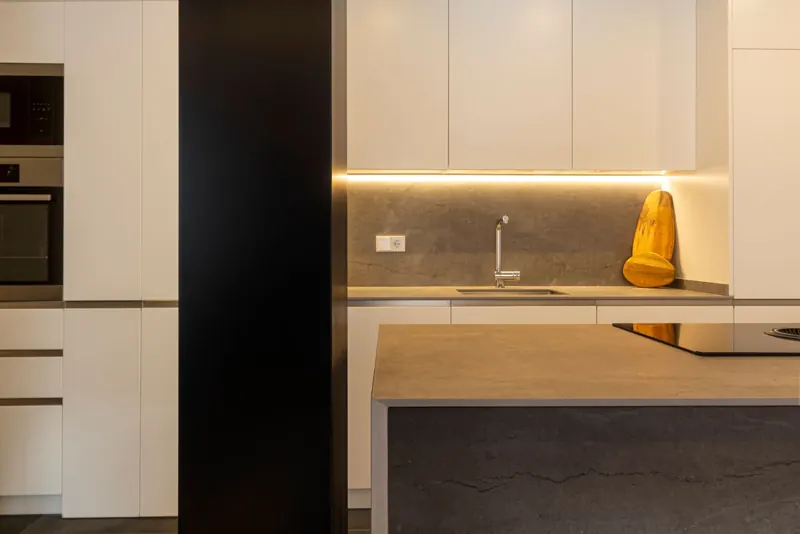
Under-cabinet and accent lighting
LED tape and puck lights under kitchen cabinets make countertops easier to work on and look great. The cleanest installs hide the wiring and use a switch or dimmer rather than a plug-in transformer. Accent lighting in shelves, cove ceilings and stairs works the same way.
Dimmers and LED compatibility
Flickering, buzzing or LEDs that won't dim smoothly are usually a mismatch between the dimmer and the bulbs or fixtures. Older dimmers were designed for incandescent bulbs. Using an LED-rated dimmer that's compatible with your fixtures, and setting its low-end trim, solves most of these problems. Smart dimmers and switches also need a neutral wire in many cases, which older homes sometimes lack at the switch box.
Outdoor and security lighting
Outdoor lighting makes a home safer and more welcoming, and in an area with severe storms it needs to stand up to the weather. We install:
- Motion-sensing floodlights for driveways, side yards and garages
- Porch, entry and garage fixtures rated for damp or wet locations
- Landscape and path lighting, low-voltage or line-voltage
- Dusk-to-dawn and timer controls for consistent security lighting
Outdoor fixtures and boxes need to be weather-rated and properly sealed, and new outdoor outlets need GFCI protection. For businesses, see commercial lighting retrofits.
Lighting ideas by room
- Kitchen: recessed lights over counters, pendants over the island, under-cabinet LEDs for the work surface
- Living room: dimmable recessed or accent lights, with a fan/light combo on its own controls
- Bathroom: even vanity lighting at face height and a damp-rated fixture over the shower
- Bedrooms: warm, dimmable light, with a ceiling fan for summer
- Garage and shop: bright LED fixtures, which are easier on the eyes and on the power bill than old fluorescent tubes
Do you need a permit for lighting work?
It depends on the job. According to the City of Tuscaloosa's permit guidance, replacing an electrical fixture with no new circuits doesn't require a permit. Installing recessed lighting on a new circuit, or adding circuits for outdoor lighting, falls under alterations that involve running new circuits, which do. We'll tell you which applies to your project.
How lighting installation works
- Plan: we talk through how you use the room, where light is needed, and fixture and dimmer choices.
- Check the circuit: load, switch locations and attic access.
- Layout: fixture positions are marked so you can see them before any holes are cut.
- Install: fixtures, wiring, switches and dimmers.
- Test and adjust: dimming range, color and aiming.
What affects lighting installation cost
- Number and type of fixtures: wafer LEDs, pendants or chandeliers
- Ceiling access: attic above or a finished floor above
- New switch locations or a new circuit
- Ceiling height and heavy-fixture support
- Outdoor work, trenching or weather-rated equipment
Project Gallery
Electrical work examples: photos of the kind of lighting installation work this page covers. They are illustrative and are not presented as specific local jobs, customers or locations.
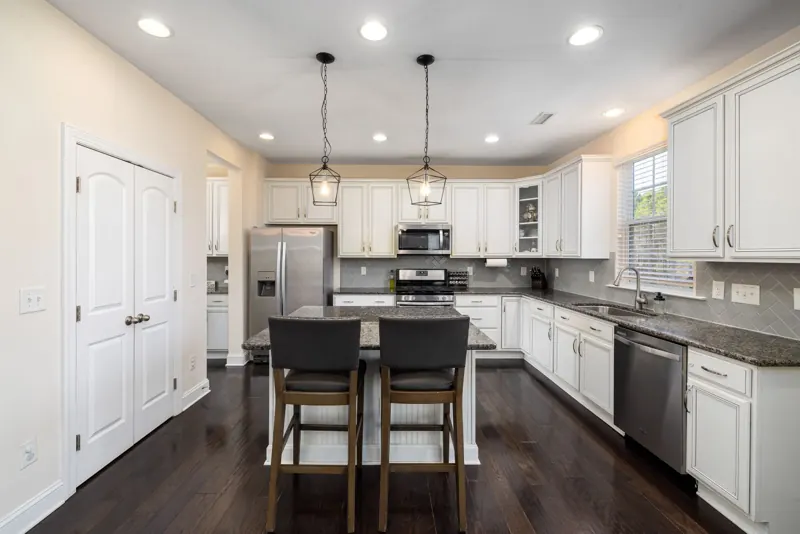
Pendants over an island with recessed lights around the room. 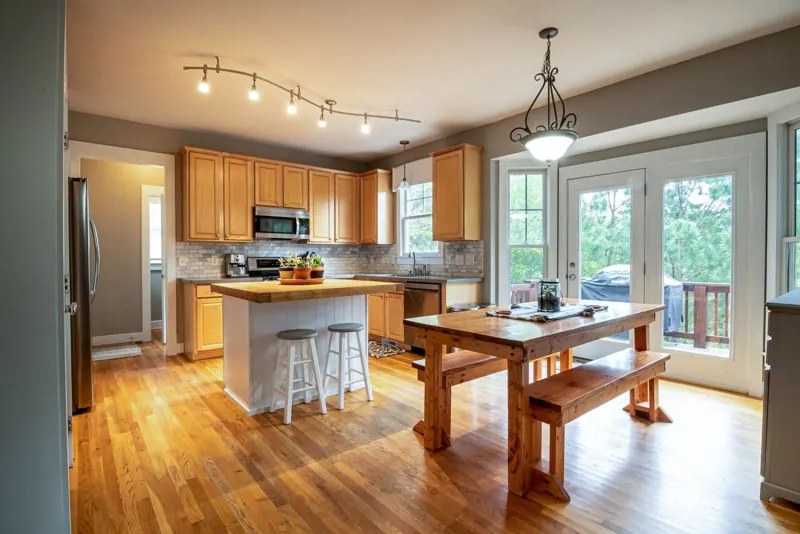
Track lighting over the kitchen and a fixture over the table. 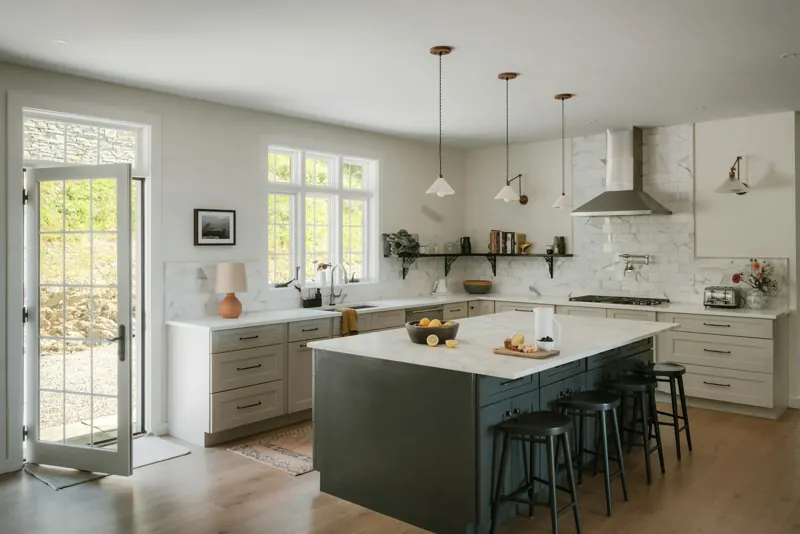
Pendant lighting over a kitchen island. 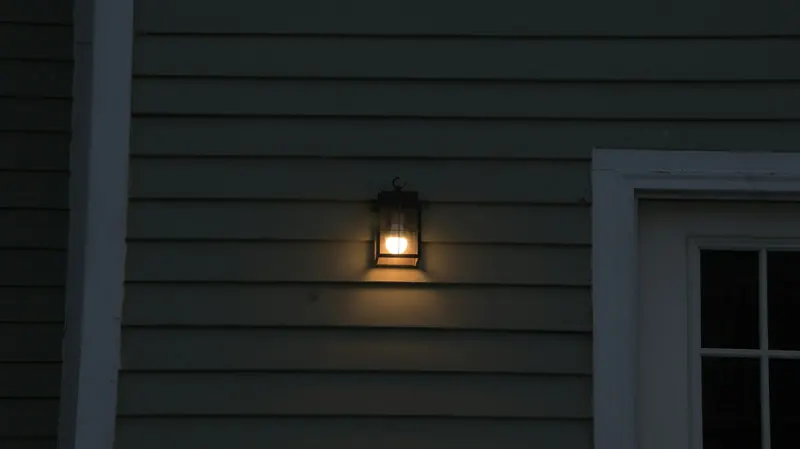
A damp-rated exterior wall light beside a door.
Frequently asked questions
How many recessed lights do I need?
It depends on room size, ceiling height and how you use the space. A common starting point is spacing them about half the ceiling height apart, adjusted for counters, seating and features. We'll lay it out with you.
Can recessed lights be installed with no attic access?
Usually, yes. Slim LED wafer lights install from below through small holes, and wiring can often be fished between joists.
Why do my LED lights flicker on the dimmer?
The dimmer probably isn't compatible with LED loads, or its minimum setting needs adjustment. An LED-rated, compatible dimmer usually fixes it.
Do I need a permit to replace a light fixture in Tuscaloosa?
No, not for a straight replacement with no new circuit. Adding new circuits does require a permit.
Can you install a ceiling fan where a light fixture is now?
Yes, as long as the box is fan-rated. See ceiling fan installation.
Planning new lighting? Call to talk through the layout.
Call and talk it through. Emergency calls are answered 24/7.
Call +123456789